Which Pruning Loppers Do You Actually Need? Answer 3 Questions First.
This article contains affiliate links — if you buy something, we may earn a small commission at no extra cost to you.
“When the branch you’re trying to lop off won’t fit into the lopper’s jaws, that’s when you go back in the house and get the saw.”
That’s u/GrandmaGos on r/gardening, and it’s the most useful thing you can know before buying loppers. Half the frustration people have with loppers comes from asking them to do the wrong job — forcing a 3-inch hardwood trunk through jaws rated for 2 inches, then blaming the tool when something snaps.
The second most useful thing: the “best” loppers depend entirely on what you’re cutting, how often, and whether the wood is alive. The community consensus on r/BuyItForLife is clear that Fiskars, Felco, and Corona each dominate a specific niche — and buying the wrong tier is just as wasteful as buying cheap.
Here’s how to figure out which one is yours.
Answer These 3 Questions First
1. Is the wood alive or dead?
This is non-negotiable. Bypass loppers (where two blades slide past each other, like scissors) are for live, green wood. Anvil loppers (where one blade presses down into a flat plate) are for dead, dry wood. As u/dreambrulee puts it on r/gardening: “Bypass is for live wood; anvil pruners/loppers for dead wood.” Use an anvil lopper on a living branch and you crush the tissue instead of slicing it — the ragged wound becomes a disease vector. Use a bypass lopper on bone-dry deadwood and you’re working harder than you need to.
2. How often will you actually use them?
The most repeated advice across every thread: frequency justifies price. One anonymous commenter on r/gardening said it plainly: “Felco is amazing but mega expensive. Unless it’s something you are going to use every day, then just get whatever at Home Depot. Fiskars is an adequate brand.” If you’re trimming roses and a few shrubs twice a year, a $50 Fiskars is the right answer. If you’re pruning 60 fruit trees every dormant season, the math shifts fast.
3. How thick are the branches, and how high up?
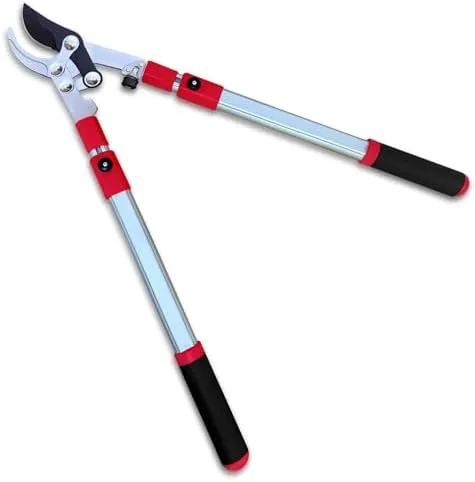
Most quality loppers handle up to 2 inches. Hardwood at the limit of jaw capacity is miserable — you’re better off with a pruning saw (Silky gets near-universal professional praise). For branches above head height, handle length matters: 32 inches is standard, 36 inches buys meaningful reach, and telescoping models go further.
The Recommendations, Matched to Your Situation
If You’re a Homeowner with Normal Yard Work: Fiskars PowerGear2 32-inch Bypass Lopper (~$40–$65)

The PowerGear2 is the answer for most people, and the r/BuyItForLife thread makes this clear. u/Gelby4’s comment — “Fiskars are pretty great, and have lifetime warranties” — pulled 69 upvotes. That’s not a hot take; it’s consensus.
The compound gear mechanism delivers up to 3x more cutting force than standard loppers, which means branches that would require real effort on a budget tool become easy. The non-stick blade coating resists sap and rust. At 32 inches, you get decent reach without adding serious weight.
The honest trade-off: Fiskars are considered a workhorse, not an heirloom. Serious gardeners on r/BackyardOrchard don’t reach for them when they’re doing real orchard work. But for a homeowner cutting back overgrown shrubs, trimming rose canes, or taking down small tree branches, the Fiskars does the job well and the lifetime warranty means you’re not gambling.
Pros:
- Compound gear multiplies cutting power 3x vs. standard loppers
- Lifetime warranty
- Non-stick blade resists sap and rust
- 32-inch handles for extended reach
- Widely available, under $65
Cons:
- Not a lifetime tool in the Felco/Corona sense — no replacement parts ecosystem
- Rated for up to 2 inches; pushing past that is how loppers break
If You Prune Frequently or Take This Seriously: Felco 22 Two-Hand Lopper (~$120–$180)
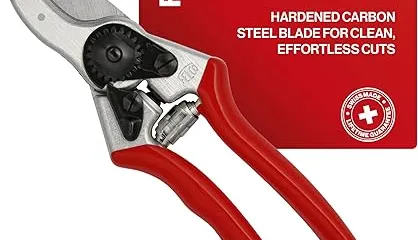
Every arborist in every thread mentions Felco. u/dreambrulee’s breakdown was direct: “Felco is the gold standard, not just for quality but also for the fact that you can replace the blades without having to purchase a whole new tool. Every arborist uses Felco. Expensive but a lifetime tool.”
The Felco 22 earns this reputation through Swiss-engineered precision, forged aluminum handles that are remarkably light, and — critically — a genuine parts ecosystem. Replacement blades, springs, and bumpers are available worldwide. When the blade gets dull after years of use, you replace the blade, not the tool. That’s the actual long-term value proposition.
The one legitimate criticism came from u/tameroftrees, a professional in r/BackyardOrchard: “I don’t like Felco because they’re thick one side and thin the other, so if you’re pruning to branch collars you constantly have to turn them to the other side.” This is a real quirk of the asymmetric blade design. For most users it won’t matter. For someone making hundreds of precision pruning cuts at branch collars, it’s worth knowing.
Pros:
- Genuine lifetime tool with available replacement parts
- Lightweight forged aluminum handles
- Used by professional arborists as daily-carry tools
- Precision cuts promote clean plant healing
- Easy to spot with bright red handles
Cons:
- $120–$180 is hard to justify for occasional use
- Asymmetric blade requires repositioning when pruning to branch collars
The Middle Ground for Serious Work: Corona 36-inch Bypass Lopper (~$70–$110)

Corona occupies a useful gap — professional-grade construction without Felco’s price tag. The 36-inch version is the one worth recommending. As u/newsirgawaine noted on r/BuyItForLife: “Buy the smallest ones that will do the job. I have 4 pairs and the enormous ones are too heavy to use more than 10 minutes.” The 36-inch handles hit a sweet spot of reach without the fatigue that plagues the largest Corona models.
The blades are forged heat-treated steel — resharpenable and replaceable — and the dual arc geometry delivers serious cutting power. u/mistermanhat spoke to real-world durability: “Corona DualLink Loppers. I’ve cut trees down that I should’ve used a saw. I cut down a bunch of cottonwoods, maple, elm, mulberry, and Locust trees. I’ve had them for three years now and just now I’ve had to sharpen them.”
If you’re doing orchard work or fruit tree maintenance and want a tool that performs at a professional level without the Felco premium, the Corona 36-inch is the pick.
Pros:
- Forged heat-treated blade — resharpenable and replaceable
- Lightweight aluminum handles
- Deep sap groove prevents sticking
- Extra reach vs. 30-inch models
- Real-world durability validated by community users
Cons:
- Larger models get heavy fast; stick to 36 inches, not the biggest ones
- The 30-inch comfort-gel version was called a professional user’s “least-used pruning tool”
For Orchardists Who Need Reach: ARS Long-Reach Bypass Loppers (~$100–$200)
ARS gets less community discussion than the big three, but the users who own them are evangelical. u/the_perkolator on r/FruitTree listed out their entire tool kit and specifically called out: “ARS 6ft long-reach loppers — love this tool!” and the telescoping version with swappable heads. A separate user, u/econ0003, reported: “Mine have stayed razor sharp for about 10 years now pruning 60–70 fruit trees. Very clean cuts. Chrome plated blade so it doesn’t rust. Made in Japan.”
The chrome-plated Japanese steel is the differentiator. If your use case is regular fruit tree work — lots of cuts, diverse branch angles, need for reach without a ladder — ARS earns serious consideration. The 6-foot fixed version and the 4–7-foot telescoping version cover most orchard scenarios.
Pros:
- Japanese steel stays sharp for years with minimal sharpening
- 6-foot and telescoping versions available for serious reach
- Exceptional clean-cut quality reported by long-term users
- Telescoping models support swappable heads
Cons:
- Less community data than Felco/Fiskars/Corona
- Premium pricing similar to Felco
For Dead Wood or Limited Hand Strength: Spear & Jackson 8290RS Ratchet Anvil Lopper (~$50–$80)
The ratchet mechanism cuts in small controlled steps, which dramatically reduces the peak force required per squeeze. This is the right tool for two specific users: anyone cutting dead, dry, or very hard wood where bypass geometry struggles, and anyone with limited grip strength or hand fatigue issues.
The YouTube reviewers cover this one well. The telescoping handles extend from 28 to 40.5 inches, covering both close-in and overhead work. SK5 carbon steel blade with PTFE coating for friction and rust resistance. Locking mechanism for storage.
The caveat: do not use this on living wood. Anvil design crushes the branch — appropriate for dead material, damaging for live tissue.
Pros:
- Ratchet mechanism reduces force required per cut
- Telescoping handles cover a wide range of situations
- Good for users with limited hand strength
- SK5 carbon steel is durable
Cons:
- Anvil design is not appropriate for live wood
- Less real-world Reddit validation than other picks
Quick Comparison
| Lopper | Price | Best For | Mechanism | Blade Capacity |
|---|---|---|---|---|
| Fiskars PowerGear2 32” | $40–$65 | Homeowners, general yard work | Bypass (compound gear) | Up to 2” |
| Felco 22 | $120–$180 | Frequent pruners, arborists | Bypass (precision) | Up to ~1.5” |
| Corona 36” | $70–$110 | Orchard/fruit tree work | Bypass | Up to 2” |
| ARS Long-Reach | $100–$200 | High branches, orchardists | Bypass | Varies by model |
| Spear & Jackson 8290RS | $50–$80 | Dead wood, limited hand strength | Ratchet anvil | Up to ~1.75” |
A Few Rules That Will Save You Money
Know when to put the loppers down. When the branch doesn’t fit cleanly in the jaws, stop. Forcing it is how loppers snap and how plants get damaged. Pick up a Silky pruning saw — it’s faster and safer for anything over 2 inches.
Avoid the biggest models. u/newsirgawaine owns four pairs and says the enormous ones are “too heavy to use more than 10 minutes.” Buy the smallest lopper that handles your branch diameter.
Single-bolt construction is worth avoiding. A commenter on r/gardening specifically called this out: two-bolt construction handles torque far better under load.
Keep the blade sharp. A dull lopper doubles the effort required and produces ragged cuts. Both Felco and Corona sell replacement blades — that repairability is part of the long-term value of each tool.
The Short Version
For most people: get the Fiskars PowerGear2 and stop thinking about it. The lifetime warranty covers you, the compound gear handles everything a normal yard will throw at it, and it costs less than a dinner out.
If you’re maintaining an orchard, pruning fruit trees regularly, or just want a tool you’ll use for the next thirty years without replacing it: Felco 22 if you want the gold standard, Corona 36-inch if you want to save $60–$80 without meaningful sacrifice.
And if you’re ever standing in front of a branch that clearly won’t fit in the jaws: go get the saw.