Most 'Neem Oil' Sprays Are a Waste of Money. Here's What to Buy Instead.
This article contains affiliate links — if you buy through them, we earn a small commission at no extra cost to you.
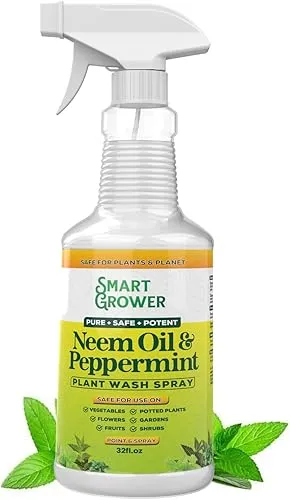
There’s a trap waiting for you in the garden center aisle, and it’s labeled “Neem Oil.”
One pepper grower on r/HotPeppers discovered it the hard way: “I just checked both bottles of ‘neem oil’ and ‘neem oil extract’, and both are primarily comprised of ‘clarified hydrophobic extract of neem oil.’ So both of the products I have been using for pest control on my peppers do not contain the primary natural ingredient in neem oil that provides that pest control!” (u/[deleted], 4 upvotes). Their response summed it up: “Just went and bought two bottles of useless garbage I guess.” — u/SquadSacker
That’s the myth: neem oil is neem oil. It isn’t. The two products sitting side by side on the shelf can be fundamentally different — one a genuine insect growth regulator, the other little more than an overpriced smothering oil.
Here’s what’s actually going on, and which products are worth your money.
The Azadirachtin Problem
Neem oil’s pest-control power comes primarily from azadirachtin, a compound that acts as an insect growth regulator (IGR). It disrupts molting cycles, suppresses reproduction, and discourages feeding — effects that build up over multiple applications and make neem useful as a long-term preventative.
When neem oil is processed into “clarified hydrophobic extract of neem oil,” the azadirachtin is removed. What’s left is a fatty oil that can smother soft-bodied insects on contact — but the systemic IGR effect is gone entirely.
As u/Callate_La_Boca put it on r/microgrowery: “Cold pressed is diff than this junk. This is just a smothering oil. You want azadiractin in it.”
The fix is simple: always look for “100% cold-pressed neem oil” on the label. If it says “clarified hydrophobic extract,” put it back.
What Actually Works
1. Dyna-Gro Pure Neem Oil — Best Pure Concentrate
This is the brand that gets recommended first, second, and third on every gardening subreddit where neem oil comes up. u/Willing_Canary4415 (27 upvotes on r/gardening) was direct: “Get you the dyna gro brand of neem. Straight thick neem oil and cheap.” u/xander25852 on r/indoorgardening echoed it: “Buy 100% neem oil / pure neem oil. Dyna-Gro is a really common brand.”
The thickness is a reliable quality signal — pure cold-pressed neem is viscous and dark. If the bottle you’re holding looks watery and pale, that’s a red flag.
At $15–$25 for a concentrate that makes gallons of spray, it’s also genuinely cost-effective. The caveat is that you have to mix it properly — and proper mixing is more involved than most people realize.
The mixing matters more than the brand. Neem oil requires warm water (around 80°F or above) to emulsify correctly. Cold water causes separation, and a separated solution means uneven application. The standard ratio: 1 oz neem oil + 2 ml of a silica product (like Pro-Tekt) or dish soap per gallon of warm water, mixed thoroughly. Keep shaking the sprayer as you go — the solution will settle.
Pros:
- 100% cold-pressed — azadirachtin intact
- Highly concentrated, low cost per application
- Strong community consensus as the go-to pure option
- Thick consistency signals genuine quality
Cons:
- Requires warm water and proper emulsification — skipping this wastes the product
- Strong sulfur-like smell that many users find unpleasant
- Can clog leaf pores if over-applied or used in midday heat
- Toxic to bees and beneficial insects — timing of application matters
2. Bonide Neem Oil Concentrate — Best for Fungal Disease + Pests Together

Bonide’s concentrate is the branded option for gardeners who want a proven product without sourcing raw materials. Scott from the YouTube channel Trim That Weed reviewed it directly: “It is a three-in-one solution for pests performing as a miticide, insecticide, and fungicide for the garden… it stands out among other pesticides because it protects your plants throughout the year regardless of the season.”
The fungicidal claim is genuinely useful. Bonide targets powdery mildew, botrytis, pythium, and other common fungal issues in a single bottle — which makes it particularly valuable for vegetable gardeners dealing with both pest and disease pressure simultaneously. One regular user on r/HotPeppers: “I am a fan of Bonide neem oil. I buy the concentrate and go through gallons of the stuff as I spray my garden weekly during the season.”
The trade-off is cost per application compared to buying pure neem oil in bulk, and the same pollinator hazard as all neem products. Bonide also works on all stages of pest development — eggs, larvae, and adults — and can be used as a dormant spray year-round.
Pros:
- 3-in-1 miticide, insecticide, and fungicide
- Kills eggs, larvae, and adult pests
- Controls fungal diseases including powdery mildew and botrytis
- Available in concentrate and ready-to-use formats
- Suitable for use up to harvest on food crops
Cons:
- More expensive per application than DIY pure neem oil
- Can harm bees, butterflies, and earthworms — apply with care
- Ready-to-use format especially poor value; premixed neem sprays often use the inferior clarified extract
3. Captain Jack’s Dead Bug Brew — Best for Active Infestations

Here’s where the research gets genuinely surprising: for a heavy, active infestation, neem is the wrong tool. Neem is a preventative. Its IGR effect works over time, interrupting pest lifecycles across multiple applications. If you already have a serious problem, you need something that hits faster.
Captain Jack’s Dead Bug Brew contains spinosad, a naturally-derived compound fermented from soil bacteria that’s substantially more effective for active outbreaks. One commenter on r/microgrowery was emphatic: “That is a so-so insecticide. Get something from captain jack’s that contains spinosad. You could spray neem oil 24/7 and still not get the results that 2-3 applications of spinosad will give you.” Another user on r/RareHouseplants put it simply: “Captain Jacks dead bug brew — I like it as a light treatment, or for outdoor use… it’s been a treatment and preventative.” (u/SatisfactionPrize550, 3 upvotes)
Captain Jack’s is also organic, uses no harsh synthetic poisons, and requires no rinsing after application. It’s consistently recommended across multiple subreddits — r/RareHouseplants, r/microgrowery, r/gardening — by users who tried neem and found it inadequate.
Pros:
- Spinosad is significantly more effective than neem for active infestations
- Works on a broader pest range including harder-bodied insects
- No harsh synthetics
- No rinsing required
- Widely recommended across different gardening communities
Cons:
- Better as a treatment than a pure preventative (though works for both)
- Still harmful to bees — application timing still matters
- Better for outdoor or well-ventilated use on sensitive indoor plants
4. Captain Jack’s Insecticidal Soap — Best for Indoor Use

If you’re dealing with aphids, spider mites, or mealybugs on indoor plants, insecticidal soap deserves serious consideration over neem. u/Nbardo11 made the case clearly on r/gardening (18 upvotes): “Idk why neem is so popular, i use insecticidal soap and a single application will take a bad infestation down to a mild one. Cheap, safe, easy. Usually i use it on plants I’ve taken in for the winter because there are no ladybugs in my basement.”
Insecticidal soap works by disrupting the fatty acid membranes of soft-bodied insects — it kills on contact rather than through systemic action. No odor, no complex mixing, and it can be applied more frequently than neem without risk of clogging leaf pores. The limitation is scope: it won’t touch harder-bodied insects, and it provides no fungicidal benefit.
For houseplants where ladybugs and beneficial predators aren’t an option, this is often the most practical first tool.
Pros:
- No strong odor — indoor-friendly
- Single application can significantly reduce soft-bodied pest populations
- Kills aphids, spider mites, and mealybugs via fatty acid disruption
- More forgiving of application frequency than neem
- Cheap and widely available
Cons:
- Only effective on soft-bodied insects
- No fungicidal benefit
- Requires thorough coverage, especially leaf undersides
What to Skip: Garden Safe Neem Oil
Garden Safe’s neem products are the most common example of the clarified hydrophobic extract problem. Multiple Reddit users have confirmed that both their “neem oil” and “neem oil extract” products use the inferior derivative — meaning you’re spending money on a smothering oil without the IGR compounds that make neem genuinely useful long-term. There are better options at similar or lower prices.
Application: Where Most People Go Wrong
Even with the right product, poor application makes neem feel ineffective. The most consistent advice across all threads:
Temperature: Warm water only. Neem separates in cold water and will coat your plants unevenly. Keep the solution warm and keep shaking the sprayer throughout.
Timing: Apply in early morning or after dark. Neem on leaves in direct afternoon sun causes scorching — multiple users report burnt foliage from midday applications. Z Lima, a Georgia gardener who documented her spray routine on YouTube, noted that the premixed spray she used was advertised as safe in sun, but pure neem concentrate carries real burn risk.
Leaf coverage: Start with the undersides. As u/Willing_Canary4415 explained: “Spray undersides of leaves first as leaves will droop when wet, tops of leaves 2nd then stalks.” Most pests and their eggs are on the undersides — if you only hit the tops, you’re missing most of the target.
Repeat applications: Every 4 days for 2 weeks. One application does very little. Neem works by interrupting pest lifecycles, which means you need to maintain pressure across multiple generations. The single-spray approach explains most of the “neem doesn’t work” complaints.
Bees: Neem is harmful to pollinators — apply when flowers are closed and bees aren’t active. If you have flowering plants nearby, this isn’t just courtesy; neem can disrupt bee development even without direct contact.
Quick Decision Guide
| Situation | Recommendation |
|---|---|
| Preventing pests before they show up | Dyna-Gro Pure Neem Oil (spray weekly, preventatively) |
| Pests + fungal disease in one shot | Bonide Neem Oil Concentrate |
| Heavy active infestation, need fast results | Captain Jack’s Dead Bug Brew (spinosad) |
| Aphids or mites on indoor houseplants | Captain Jack’s Insecticidal Soap |
| You hate the smell of neem | Captain Jack’s Insecticidal Soap or Dead Bug Brew |
| Cannabis plants in flower stage | Nothing with neem — it taints flavor; use spinosad in veg only |
The Bottom Line
If you read nothing else: check your current neem oil label. If it says “clarified hydrophobic extract of neem oil,” you have the stripped-down version. Buy Dyna-Gro or Bonide concentrate instead, learn to mix it properly with warm water, and apply it every four days — not once and never again.
If you’ve already tried real neem oil and found it insufficient, that’s not a personal failing. Neem is a preventative, not a cure. A heavy active infestation calls for Captain Jack’s Dead Bug Brew and its spinosad payload. Two or three applications there will do more than months of neem spray on a plant that’s already overrun.
The best organic pest control isn’t complicated. It’s reading the label and matching the tool to the job.