Four Metal Raised Garden Beds, Four Years of Real-World Use: Here's What Won
Heads up: some links below are affiliate links. GardenVerdict earns a small commission on qualifying purchases, at no extra cost to you.
GardenVerdict earns a commission on qualifying purchases — this doesn’t change what I recommend, just helps keep the lights on.
Here’s something the spec sheets won’t tell you: one of the most popular metal raised garden beds on Amazon is rusting from the inside out. The outer panels look fine. The bolts look fine. But the internal support bars — the ones buried in your soil and holding the whole structure together — are already showing corrosion after just one year.
That’s Anleolife. More on that below.
The good news is that two brands have now been put through four-year real-world tests, including hurricane-force weather, and come out looking genuinely brand new. If you want the short answer: buy Vego Garden or Vegega. Either one. They’re so similar that the reviewer who tested both side-by-side said to just pick whichever you prefer aesthetically.
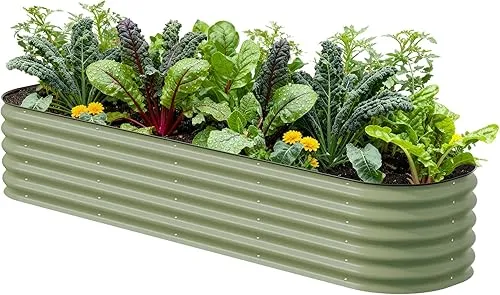
The Clear Winner: Vego Garden 9-in-1

Four years. Sixteen beds. Soil in contact with the panels and hardware 365 days a year. A tractor bumping into one of them (long story). And the verdict from the reviewer who went through all of it: “All 16 of my beds look brand new.”
That’s not marketing copy. That’s someone describing what they found when they dug down to the base of the panels that had been buried underground for four years straight.
The specifics matter here. Vego Garden uses zinc-magnesium-aluminum coated steel (their “VZ 2.0” formulation), independently verified by a Texas A&M corrosion lab. The panels, the bolts, the cross support bars — all of it gets the same treatment. After four years buried in soil: “No rust, no discoloration. The paint isn’t even wearing off.”
The cross support bars are worth calling out specifically. In a wide raised bed filled with heavy, wet soil, there’s constant outward pressure on the panels. Vego’s cross bars run horizontally to prevent bowing, and they work — even after years of use, no warping. The panels stay plumb.
The 17-in vs. 32-in decision is bigger than most people realize. The 32-in height is genuinely waist-level — you can garden standing up, which is a meaningful quality-of-life upgrade if you have back issues. But filling a 32-in bed requires dramatically more soil volume than a 17-in. At scale, your soil cost can easily exceed what you paid for the beds. (More on the soil math below.)
One legitimate complaint: the hardware isn’t sorted into separate bags. Acorn nuts and standard nuts come mixed together, and sorting them before you start adds about 40 minutes per bed. It’s a real annoyance for a premium product. Assembly itself is otherwise clear enough that reviewers built 15 subsequent beds without re-reading the instructions.
The rubber top edging shrinks over time and develops small gaps at the ends — this is consistent across years and colors and appears to be a Vego-wide issue. It’s cosmetic, not structural. Cutting the edging slightly longer than needed during installation helps.
Best for: Anyone who wants a 20-year raised bed and doesn’t want to think about it again. Especially worth it if you’re setting up multiple beds — the durability math improves with scale.
The Essentially Identical Alternative: Vegega 2.0

If Vego Garden is sold out, backordered, or you just prefer the look of Vegega’s trapezoidal panel design — buy Vegega. The reviewer who tested both side-by-side put it plainly: “VGO and Vegega, they are very, very similar companies. Their raised beds are made almost exactly the same way. Pick whichever one you like.”
Three years of field testing on the tiered Vegega bed: no rust on panels, no rust on bolts, no structural issues. “This one honestly looks to be in just as good shape as any of the newer ones.”
The trapezoidal panel geometry (Vegega’s alternative to wavy panels) is claimed to resist bowing without cross supports in wide configurations. The evidence so far backs that up — no outward bowing observed even on wide beds without horizontal cross bars. Vegega also offers a tiered raised bed design that Vego doesn’t match, which is worth considering if you want visual dimension or are gardening on a slope.
Same rubber edging shrinkage issue as Vego. Same general quality ceiling.
What to Avoid: Anleolife
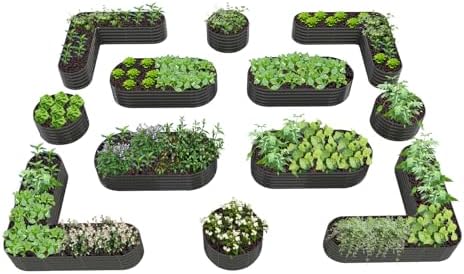
Anleolife makes a compelling pitch: the largest footprint of any brand tested, outer panels with no visible rust at year one, and no bowing in the walls. From the outside, it looks like it belongs in the same conversation as Vego and Vegega.
Then someone checked the internal support bars.
“I can already tell on these support bars that this is showing a little bit of rust here at the top… this looks very much like rust.” — that’s a year-one review, not a year-four one.
The theory is that the internal support bar material didn’t receive the full corrosion-resistant coating treatment that was applied to the outer panels. Whatever the cause, rusty structural components after twelve months is a meaningful red flag for a product you’re supposed to have in your garden for a decade.
If you genuinely need a bed footprint larger than what Vego or Vegega can provide, Anleolife is the only option in this group. But go in with eyes open: the long-term structural integrity of those support bars is a legitimate unknown, and rust only moves in one direction.
The Budget Wildcard: Kesfitt
Note: Kesfitt’s ASIN appears to duplicate another product in our database, so linking by name.
At one year, Kesfitt is surprising. No rust on bolts, no rust on exterior panels — better than Anleolife at the same age. For the lowest price of any brand tested, that’s a real accomplishment.
The issue is what the reviewer noticed on the inner coating: visible cracking and fading at year one. The exterior holds up because the coating sits on top. Where the coating has already started breaking down, that’s where rust will eventually find its way in.
“I am worried that in a couple of years when we do another update, that’s going to be the place where it’s going to start failing.” That reviewer hasn’t yet published the multi-year follow-up. The final verdict on Kesfitt is genuinely unknown.
If you’re a renter, trying raised bed gardening for the first time, or need beds for a season or two without long-term expectations, Kesfitt may be fine. If you’re building out a permanent garden and want beds that outlast you, the extra cost of Vego or Vegega is clearly worth it.
The Part Everyone Gets Wrong: Soil
Before you finalize your bed size, run the soil math. Filling a tall raised bed with bagged soil from a garden center will cost you more than the beds themselves — sometimes significantly more, especially if you’re buying multiple beds or the 32-in height version.
The approach that makes financial sense:
- Source bulk topsoil and compost locally (landscaping suppliers, not retail)
- Use a 50/50 topsoil-to-compost ratio for a high-quality growing medium at a fraction of retail bag prices
- Fill the bottom 12–18 inches with logs, branches, and woody debris (hugelkultur-style) — this reduces the volume of expensive growing medium you need and improves drainage and soil biology over time
Budget for soil settling too. Beds filled to the rim in spring will drop several inches by fall. Plan to top up with compost at the start of each season.
Assembly Tips (If You Go With Vego or Vegega)
These are worth knowing before you start:
- Leave the protective plastic film on during assembly. Panels scratch easily when rubbing against each other; the film prevents this. Remove it only after everything is bolted together.
- Sort all hardware before you touch a panel. Dump everything out, separate the fastener types, and stage them. The reviewer who skipped this step spent 40 extra minutes per bed hunting for the right bolts.
- Cut rubber top edging a bit long. It will shrink back over time. Better to have extra that curls under than a gap where it shrank away.
- Install drip irrigation before planting. The setup is much easier on empty beds. Young transplants need supplemental hand watering until they’re established, but after that, a timer and drip system largely handles itself.
If You Read Nothing Else
Buy Vego Garden. If you want the tiered design or Vegega is cheaper when you check, buy Vegega. They’re the same product at the quality level that matters.
Skip Anleolife unless footprint is your only constraint — rusting internal structure at year one is a deal-breaker for a product that’s supposed to last a decade.
On Kesfitt: the jury is still out. It’s a reasonable gamble for a temporary setup. It’s not where you want to put money for a permanent garden.
And regardless of which bed you choose: do the soil math before you order. Your budget for fill often ends up being bigger than your budget for beds.