Stop Buying Teepees: What Reddit Gardeners Actually Use for Climbing Vegetables
This article contains affiliate links — if you buy through them, we earn a small commission at no extra cost to you.
It’s 2am in a Kansas windstorm and u/TheDonkeyBomber’s trellis is still standing. Three years, same bamboo poles, holding up Tromboncino squash, aehobak, and cucumbers simultaneously. Meanwhile, half the gardening internet is buying decorative teepees and wondering why their squash fruits are unreachable inside a tangle of vines.
This guide is the research you’d do if you had two weeks and a Reddit account. I synthesized five threads across r/gardening, r/vegetablegardening, and r/OrganicGardening, plus two detailed YouTube deep-dives, into one decision framework. The upshot: there’s a clear community favorite for serious growers, genuine alternatives for everyone else, and one structure type that almost everyone says to avoid.
Quick Picks
- Best Overall (Raised Beds) — Cattle Panel Arch · $30–60/panel
- Best Budget (No Truck) — Concrete Remesh Arch · $15–40/sheet
- Best for Lightweight Crops — Bamboo Poles + Nylon Netting · $20–50
- Best for Compact Spaces — A-Frame Trellis · $15–60
- Best for Indeterminate Tomatoes — String Trellis with Double Tomato Hooks · $15–30
- Best Cheap Mesh — Ladder Mesh + PVC Frame · $10–25
The One Thing to Know First
If you’re growing large-fruiting vining crops — squash, melons, cucumbers — do not use a teepee or fully enclosed structure. The community agrees on almost nothing, but they agree on this. As u/rjeanp on r/gardening explained: “If it was an enclosed teepee I would never be able to harvest because the vines are pretty thick and gravity will pull the fruits into the inside.” u/drawerdrawer echoed it directly: “I prefer an open structure so I can harvest the beans/cucumbers/squash that grow on the back side. With a teepee it’s too difficult to reach inside.”
Open structures — flat panels, A-frames, arches — let you access both sides. That’s the baseline.
The Contenders
Cattle Panel Arch or Flat Trellis {#cattle-panel}
$30–60 per panel · Buy on Amazon
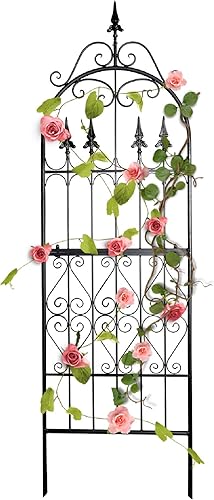
This is the community consensus pick, and it’s not close. Across every thread that asked “what trellis do you use,” cattle panels came up repeatedly and with conviction. The appeal is simple: a standard 50-inch × 16-foot panel spans a raised bed cleanly, bends into a tunnel arch with a bit of muscle, and will outlast you in the garden.
u/CitrusBelt on r/vegetablegardening put it best: “For the nicest, cattle panels hung from large s-hooks on a frame made of 3/4” EMT conduit & fastened with canopy/tarp fittings. Sturdy, will last a very long time, and can be taken down easily for storage. Pricey, but well worth it.”
On the Rustic Garden Homestead YouTube channel, the host demonstrates how to install them into a raised bed before filling with soil — the panel presses outward against the frame and locks in place without any fasteners. It’s clever and genuinely simple once you see it.
The YouTuber behind the “greatest garden trellis ever” video took it further, building a 35 × 16-foot overhead roof structure using cattle panels as both rain cover support and trellis grid. He hangs double tomato hooks from the panel above, drops string down to the plants, and created what he calls a two-story garden. That’s the high end of the cattle panel universe, but even a basic arch on two T-posts delivers most of the benefit.
Pros
- Lasts indefinitely — multiple users report same panels after 10+ years
- Flexible enough to arch, rigid enough to stand flat
- Handles squash, melons, and indeterminate tomatoes without sagging
- Can be used as overhead trellis grid for string training
Cons
- Requires truck or $80+ delivery fee — this is the main objection in every thread
- Heavy and awkward to maneuver solo when bending into arch
- Higher upfront cost than mesh or bamboo alternatives
Best for: Gardeners with raised beds who want a permanent, high-capacity structure for heavy vining crops. If you’re serious about squash or indeterminate tomatoes, buy these once and stop thinking about trellises.
Concrete Remesh / Reinforcement Mesh Arch {#concrete-remesh}

$15–40 per sheet · Buy on Amazon
The legitimate alternative when cattle panels aren’t accessible. u/picklegrabber on r/vegetablegardening laid out the case directly: “I would’ve gone the cattle panel route but the delivery fee was something like $80 here… The concrete remesh is still bendy but solid. I was able to tie it to the top of my car and get it home. Made a great arch trellis and straight trellis.”
Concrete reinforcement mesh (sometimes called rebar mesh or remesh) is the stuff used to strengthen concrete pours. It comes in flat sheets, bends well enough to form an arch, and is rigid enough to hold its shape once in place. It’s also uncoated — which matters for organic gardeners. u/sockuspuppetus on r/OrganicGardening specifically called this out: “I use concrete reinforcement mesh — it’s like fence wire but isn’t zinc coated and the squares are not graduated.” One commenter noted their galvanized conduit wire rusted through after about 12 years; remesh avoids that coating issue entirely.
| Cattle Panel | Concrete Remesh | |
|---|---|---|
| Price per panel | $30–60 | $15–40 |
| Transport | Needs truck | Fits on car roof |
| Arch flexibility | Excellent | Good |
| Longevity | Decades | Will rust eventually |
| Organic-friendly | Galvanized coating | Less coated — better choice |
Best for: Budget-conscious gardeners without truck access who want a metal arch for squash or melon tunnels.
Bamboo Poles + Nylon Trellis Netting {#bamboo-netting}
$20–50 · Buy on Amazon
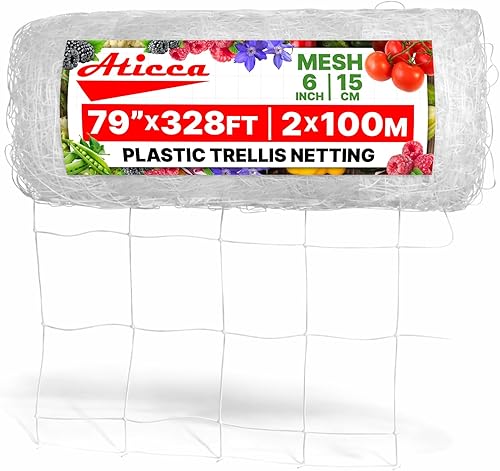
Don’t underestimate bamboo. u/TheDonkeyBomber on r/vegetablegardening shared the most compelling case for this approach: “I’ve been using 8’ bamboo poles for the past 3 years (same poles, ordered from Amazon). This one trellis had Tromboncino, aehobak, and cucumbers. Had the same type of trellis on the other side of the garden using 6’ bamboo poles and the netting. Grew butternut and shishigatani winter squash. Supports a lot of weight even with high winds (Kansas).”
Kansas wind is no joke, and if 8-foot bamboo + 6×6 nylon netting can hold up Tromboncino (a squash that reaches 3 feet long) in those conditions, the setup is sturdier than it looks. The nylon netting is the key addition — string alone can cut into vines under sustained load from heavy fruit.
Pros
- Reusable for multiple seasons — same poles last 3+ years
- Easy setup, no tools required
- Handles heavier crops than its appearance suggests
- Works in windy climates when properly staked
Cons
- Less rigid than metal; better for cucumbers and lighter squash than for watermelons
- Netting may need to be cut away at season end if vines are fully tangled in
Best for: Gardeners wanting an affordable multi-season trellis for cucumbers, beans, and lighter squash — or anyone who needs to set up and tear down seasonally.
A-Frame Trellis {#a-frame}

$15–60 · Buy on Amazon or build from deck fencing + hinges
The Rustic Garden Homestead video walks through a clever DIY version: deck fence boards, a piano hinge in the middle, shelf inserts for melon support. The hinge lets the whole thing fold flat for off-season storage. The shelf idea is genuinely smart — instead of sling-supporting heavy melons or cantaloupe, you just let them rest on the shelf as they form.
Where the A-frame shines is harvest access. Unlike a teepee, both sides of the structure are reachable. Airflow is good, which matters for fungal prevention. The trade-off versus a flat cattle panel is surface area — an A-frame is inherently smaller — and wind stability. As u/m4gpi noted: “If wind is an issue where you live, the teepee would be more stable, but the A-frame would give you the most surface area to point directly at the sun.”
Best for: Compact beds growing squash, melons, or cucumbers where you want easy harvest access and clean storage in the off-season.
String Trellis with Double Tomato Hooks + Plant Clips {#string-trellis}

$15–30 · Buy on Amazon
This isn’t a standalone structure — it requires an overhead anchor point, typically a cattle panel grid or steel cable. But for indeterminate tomatoes, the gardening YouTuber with the hybrid roof build calls it “by far my favorite method overall.” The system: hook a double tomato hook onto the overhead cattle panel, drop synthetic twine to the plant, then clip the main vine to the twine every 6–12 inches using plastic plant clips.
The clip placement matters. Always clip just beneath a leaf node — that’s where there’s something for the clip to grip without squeezing the stem. The YouTuber’s before-and-after is dramatic: an aisle you couldn’t walk through becomes navigable, with tomato vines organized vertically instead of sprawling.
The key advice from the video: “Do this early in the tomato’s life and stay on top of it. It’ll be a lot easier because once you get the tomato plant started, it’s really easy to just add another clip along the main stems every six to twelve inches.” Retrofitting onto a mature, sprawling tomato is exactly as hard as it sounds.
Pros
- Keeps aisles clear and walkable
- Fully adjustable tension
- Plant clips guide vines without tying knots or risking stem damage
Cons
- Requires existing overhead structure
- Must start early — waiting until plants are overgrown makes it a multi-hour rescue operation
Best for: Indeterminate tomato growers with a cattle panel overhead grid, or anyone training tall vining crops up a permanent structure.
Ladder Mesh + PVC Frame {#ladder-mesh}

$10–25 · Buy on Amazon — look in the outdoor fencing section at Home Depot
This is the “creative DIY” option. Ladder mesh is a fencing product that most Home Depot staff will look at you blankly about — it lives in the outdoor fencing section, not the garden section. The Rustic Garden Homestead creator uses it to build half-hoops over raised beds by bending it into a rainbow shape and inserting PVC pipe through the grid to add rigidity.
It’s genuinely cheap and very flexible in what shapes you can make. The creator built a two-level growing structure for cantaloupe using it. The main limitation is that it needs framing (PVC or posts) to stand on its own — the mesh alone is floppy.
Best for: DIY gardeners who want maximum flexibility in structure shape and are comfortable building a simple PVC frame.
Installation Tips That Actually Matter
A few pieces of advice came up repeatedly across both the Reddit threads and YouTube videos:
Start early. The YouTube creator who spent hours rescuing sprawling tomatoes from stakes said it clearly: “Do this early in the tomato’s life and stay on top of it.” Trellising a mature plant risks breaking stems and takes three times as long.
Angle flat trellises slightly outward when possible. u/CitrusBelt’s advice: it makes small fruit like cucumbers and beans easier to pick, and prevents heavy fruit like squash or melons from getting flattened against the mesh surface.
Plan your sun orientation. The Rustic Garden Homestead creator spends real time on this: the trellis will cast shade, and you want the southwest sun passing through to your plants, not blocked by the structure. If the trellis faces south, the shaded side should hold crops that can tolerate reduced light.
Use T-posts or U-posts every few feet with cattle panels to prevent bowing under crop load. The panels want to spring outward — posts counteract that.
Weave twine in an S-pattern around climbing vines rather than just tying at one point. It distributes load and prevents single-point breakage when fruit gets heavy.
What to Skip
Teepees for large-fruiting crops. The community consensus is clear: fruit pulls into the interior, becomes unreachable, and airflow suffers.
Basic stakes for indeterminate tomatoes. The YouTube creator’s before footage shows exactly what happens — stakes fall over, vines break, fruit lies on the ground. Don’t wait until that happens.
Cattle panel delivery if the fee is high. If your local Tractor Supply charges $80+ to deliver, the economics of cattle panels change significantly. Concrete remesh is the right call for most of those situations.
The Short Version
If you’re growing heavy vining crops and have truck access: cattle panels. If you can’t get them home easily: concrete remesh arch. If you’re growing cucumbers and beans on a budget: bamboo + nylon netting. If you’re in a compact bed and growing melons: A-frame with shelf inserts. If you have an overhead cattle panel grid and grow tomatoes: add string trellis and plant clips.
The rest is aesthetics.