Heavy-Duty Garden Hoses: Answer These 3 Questions Before You Buy
Disclosure: GardenVerdict may earn a commission from qualifying purchases made through links in this article. Our recommendations are not influenced by affiliate relationships.
Searching “heavy duty garden hose” returns a swamp of rubber, polyester, and expandable options all claiming to be indestructible. They’re not all the same, and picking the wrong one means either hauling a 20-pound rubber snake around your yard or watching a cheap expandable hose blow out on a hot August afternoon.
Fair warning: community discussion on this specific category is thin — we found mostly vendor-produced video content and no Reddit threads to pull from. So treat this as a structural guide rather than community consensus, and do your own final-check on pricing before buying.
Here’s the thing: there’s no single “best” heavy-duty hose. The right one comes down to three questions.
Question 1: Are You Dragging This Over Rough Terrain?
If yes — rocks, gravel, pavement, equipment edges — you want rubber. Specifically EPDM rubber. Everything else is a compromise.
EPDM (ethylene propylene diene monomer) is the material that separates a real workhorse hose from a garden-center impulse buy. It handles temperature extremes that degrade other materials, resists ozone and UV exposure, and holds up against the kind of abrasion that shreds a reinforced vinyl hose in a single season. If you’re running a hose across gravel daily, EPDM is the answer and the conversation mostly ends there.
Gemplers Pro-grade Rubber Hose

This is the benchmark for rough-terrain use. Thick rubber construction resists tearing and punctures, and it handles temperature extremes that would degrade anything else: hot water up to 190°F and deep freezes down to -40°F. That freeze resistance matters — a hose left out in a hard frost won’t crack and leak when spring comes, which is a real failure mode for cheaper hoses. For anyone working outside in real conditions across multiple seasons, this is the category default.
The catch is weight. Rubber hoses are heavy by nature, and if your use case is casual backyard watering, you’ll feel every foot of hose on every pass. That’s not a deal-breaker for professionals; it’s a real annoyance for everyone else.
Question 2: Do You Want Heavy-Duty Durability Without the Weight?
The knock against rubber hoses has always been the weight. Underhill’s professional hoses occupy an interesting middle ground: high-pressure rated, genuinely tough, but significantly lighter than rubber. They use a polyester outer braid over a PVC inner lining — the braid does the structural work, the PVC handles the water. It’s the same basic architecture as premium fire hoses.
Underhill Featherweight Proline

The Proline delivers 200 PSI working pressure and 800 PSI burst pressure in a package that’s noticeably lighter than comparable rubber hoses. If you’re a contractor or landscaper who moves hoses constantly — uncoiling, dragging to the next work zone, recoiling — the weight reduction matters in terms of daily fatigue. Less so if the hose sits on a reel and you pull it to the flower bed once a week.
It’s not as rugged for abrasive surfaces. The polyester braid handles friction better than you’d expect, but if you’re genuinely dragging over gravel or sharp edges daily, rubber will outlast it. For most professional applications short of that, it’s more than adequate.
Underhill Featherweight Ultramax
The Ultramax steps this up further: 300 PSI working pressure, 1,200 PSI burst, and a 1-inch diameter for high flow volume. At 100 feet it still weighs under 15 pounds. The 1-inch diameter is the key spec here — it delivers meaningfully more gallons per minute than standard 5/8-inch hoses, which matters for large-scale irrigation or feeding a pressure washer that’s actually doing work. It’s designed specifically for professional turf managers who need extreme pressure ratings without wrecking their backs on long shifts.
Overkill for most homeowners. If you’re managing a golf course, large athletic facility, or irrigated commercial property, it’s the right tool. If your yard is under a quarter acre, it’s a solution to a problem you don’t have.
Question 3: Is Storage the Problem You’re Actually Solving?
If neither terrain nor weight is your main constraint, and you just need something heavy-duty that stores compactly — expandable hoses have gotten meaningfully better, even if they’ll never match rubber for raw abuse resistance.
The mechanism is simple: a latex inner tube expands under water pressure, then contracts when pressure is off. Quality expandables use multi-layer latex cores to slow degradation, and the durability gap between budget and mid-tier expandables is real. The failure mode is almost always the same: the latex inner tube develops a pin leak or the connector separates. Brass fittings with strain relief are the right call; plastic fittings are where cheap expandables die.
J&B X Panda 75ft Expandable
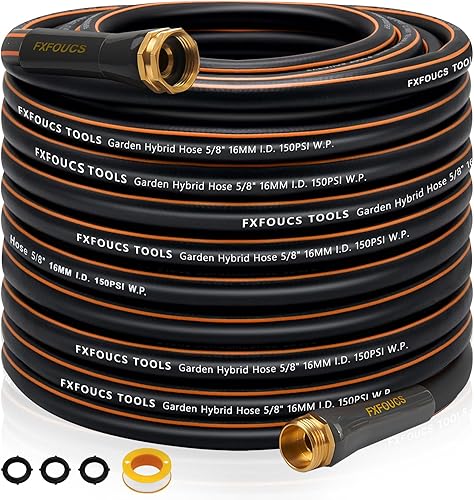
Four-layer latex core rated to 12 bars (~174 PSI), extra-strong brass connectors, and a 10-pattern spray nozzle included. For a homeowner with a larger yard who’s tired of fighting a coiled rubber hose, this is a reasonable option. Just know that expandable hoses have a shorter useful life than rubber under comparable conditions — the latex degrades faster under temperature extremes and UV exposure. Drain it after use, store it out of direct sun, and it’ll last multiple seasons.
Hydro Tech 75ft Expandable

Burst-proof design with a reinforced latex core and heavy-duty brass fittings with strain relief guards. The fittings on cheap expandables are usually where things fail first; the strain relief guard here is worth calling out — it keeps the fitting from torquing and cracking the latex where the connector meets the tube. Solid choice if the X Panda isn’t available or is priced higher.
If You Want the Best EPDM Hex Hose: Gemplers Commercial vs. Dramm Colorstorm
One more category worth addressing: the hexagonal EPDM rubber hose, which is a step up from standard round rubber in ergonomics and kink resistance. The hex cross-section isn’t just a design quirk — it creates a natural flat side that prevents rolling, is easier to grip, and kinks less than a round profile under tight bends.
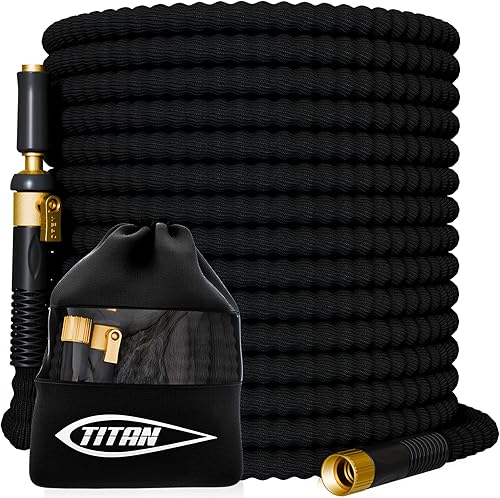
The Gemplers Commercial Rubber Hose uses EPDM rubber in that hex cross-section, creating less drag and friction when pulling across surfaces compared to round hoses. Per Gemplers’ own comparison — grain of salt, since it’s vendor-produced content — it’s comparable in quality to the Dramm Colorstorm at a lower price, though with fewer length options.
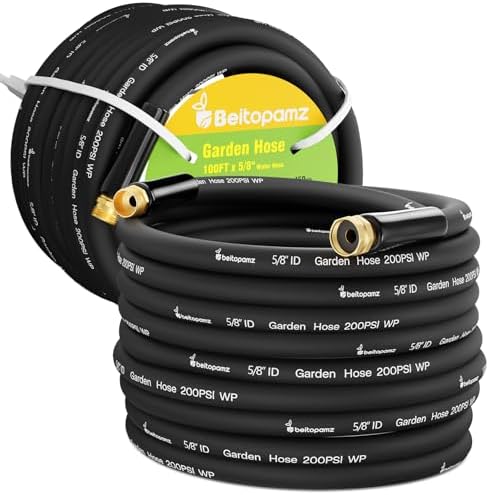
The Dramm Colorstorm Professional Rubber Hose uses the same EPDM material and hex shape. Where it pulls ahead is length availability: 75 ft and a 330 ft bulk option for large commercial properties. If you need a single long run across a big property or want to buy in bulk, Dramm gives you that flexibility. If standard lengths work for you, either is a solid choice and the Gemplers will likely save you a few dollars.
The Short Version
| Use Case | Go With |
|---|---|
| Rough terrain, extreme temps, multi-season | Gemplers Pro-grade Rubber |
| Commercial/daily use, want ergonomic hex shape | Gemplers Commercial or Dramm Colorstorm |
| High pressure without rubber weight | Underhill Featherweight Proline |
| Turf management, extreme PSI needs | Underhill Featherweight Ultramax |
| Homeowner, compact storage priority | J&B X Panda or Hydro Tech Expandable |
What to Avoid
Plastic fittings on anything. Brass only at the connections — it’s where failures happen. A $60 hose with plastic fittings will fail faster than a $40 hose with proper brass connectors.
Expandable hoses for genuinely harsh terrain. They’re better than they used to be, but rubber is still the answer if you’re dragging over rocks or sharp edges regularly. The latex core can’t take that kind of abrasion over time.
Leaving any lighter-weight hose in direct sun unpressurized. UV and heat degrade polyester-lined and latex-core hoses faster than the marketing suggests. Drain and store out of direct sun when not in use — it’ll meaningfully extend the life of anything that isn’t solid rubber.
If you’re buying once and keeping it for years in hard use, rubber EPDM is worth the weight. The hex-profile options from Gemplers and Dramm are worth the modest premium over standard round rubber if ergonomics matter. If portability matters and your use is less punishing, the Underhill fabric-reinforced hoses are a legitimate middle ground that most homeowners never consider. And if storage space is genuinely the constraint, the better expandables are a real option — just manage your expectations about longevity relative to rubber.