Fabric Grow Bags for Vegetables: 3 Questions That Determine Which Bag You Actually Need
Heads up: some links below are affiliate links. GardenVerdict earns a small commission on qualifying purchases, at no extra cost to you.
Here’s the thing nobody tells you before you buy fabric grow bags: in a hot climate, you’ll be watering twice a day. u/OccultEcologist on r/vegetablegardening put it plainly (3 upvotes): “Other containers I can get away with watering once every 1-2 days, grow bags you need to water twice a day in my region. I am trying a drip line system this year to counteract that.”
That’s not a reason to avoid them — fabric bags genuinely do outperform plastic pots for root health, and harvesting potatoes by just dumping a bag is legitimately great. But if you go in without a watering plan, you’ll watch plants stress out in July and blame the bags.
With that settled, here’s how to figure out exactly which bag you need.
Answer These 3 Questions First
1. What are you growing?
This is the biggest variable. Not all crops are equal candidates for grow bags, and size mismatches are responsible for most of the “grow bags didn’t work for me” stories on Reddit.
Size guide by crop:
- Peppers: 5–7 gallons (2 plants per bag works well)
- Tomatoes (determinate/cherry): 10–15 gallons minimum; 20 gallons preferred
- Tomatoes (indeterminate slicers): 20 gallons; 5 gallons will stunt them badly
- Zucchini: 15+ gallons for bush varieties
- Potatoes: 10–20 gallons — arguably the best crop for bags due to easy harvest
- Root vegetables (carrots, beets): 65 gallons — don’t undersize these
- Cucumbers: Avoid. Multiple Reddit users report poor results vs. in-ground or raised beds
- Corn: Avoid entirely. u/BaronvonEssen explains why (8 upvotes): “To be decent the corn has to be made in a plot no smaller than 16 square feet to achieve good pollination. The grow bags will not be big enough and too much space between them will scatter pollen.”
u/nutellatime, who has direct experience growing both, put it well: “I did all my peppers in grow bags (5 gal) last year and they LOVED it… I tried growing an indeterminate slicer tomato in a 5 gal container last year and it was a disaster.”
2. Will you be moving them?
This question separates the “any cheap Amazon bag will do” gardeners from the “buy Root Pouch” gardeners. If your bags sit in one spot all season and you water in place, handle quality barely matters. If you rotate bags for sun, move them to water deeply, or reposition for pruning — handles take real stress, and cheap ones tear.
u/calvinbuddy1972 (2 upvotes) drew the line clearly: “If the bags are going to be stationary you can get away with just about any brand on Amazon but if you’re going to use the handle to turn or move them around for watering or pruning, then probably a name brand like Root Pouch would be best.”
3. What’s your climate like, and do you have drip irrigation?
Hot, dry regions change the calculus entirely. The moisture loss through breathable fabric sides is significant — that’s the feature, not a bug, for root health — but in Zone 9 summers or anywhere with low rainfall, it becomes a daily burden. If you’re not on drip irrigation and live somewhere hot, factor in either a bag with a liner or a serious commitment to hand-watering.
The Bags, Ranked by Use Case
For Gardeners Who Move Their Bags: Root Pouch
Root Pouch is the consensus quality pick on r/HotPeppers and r/vegetablegardening. The praise is consistent and specific to longevity and handle durability.
u/Fangs_0ut: “Root Pouch are the only bags I’ll use. They’re worth the money.” Another user who has been growing with them for years noted: “I’m kind of partial to root pouch brand, been using them for 3 years or so and they are really good quality.”
Pros
- Handles hold up through seasons of repositioning and moving heavy plants
- Consistently reported to last 3–5+ seasons with minimal degradation
- Recommended by users who’ve burned through cheaper alternatives
Cons
- Noticeably more expensive than generic Amazon options
- Overkill if your bags sit stationary all season
Best for: Anyone who gardens on a patio or deck and repositions bags regularly, or who wants to buy once and not replace bags annually.
For Budget Gardeners With Stationary Setups: VIVOSUN (with a caveat)
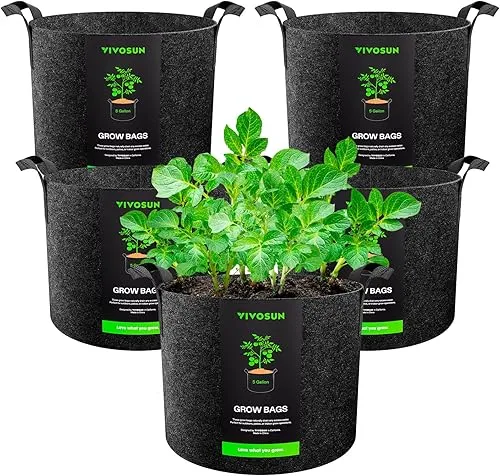
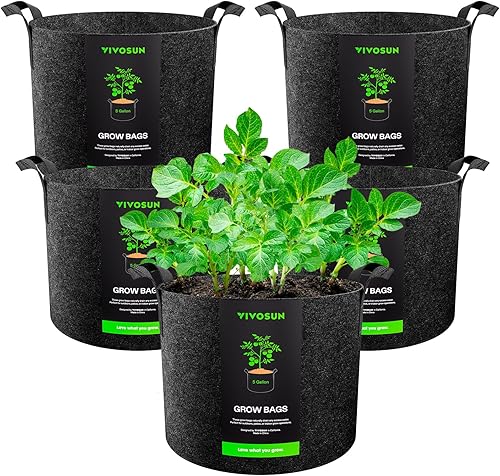
VIVOSUN is everywhere on Amazon, and for stationary setups, the 20-gallon bags have a decent track record. u/NOPNOFNOG12 reported: “I have some 20g vivosun bags from Amazon, they have held up for a couple years and I don’t take care of them at all.”
Pros
- Wide range of sizes including larger 20- and 30-gallon options
- Available in bulk; widely stocked
- Fine for 2+ seasons in low-handling situations
Cons
- The 10-gallon bags with metal grommets have a known rust problem. u/Much-Cod4055 documented the issue on r/HotPeppers: “Within a week, the grommets began rusting… The only things they have been exposed to are filtered water, sunlight, moonlight and rain. I contacted the company, and they acted like it wasn’t a big deal.”
- Quality inconsistency across their product line
- Customer support is reportedly unhelpful when defects are reported
Best for: Stationary tomato or pepper setups where you’re not relying on the handles and can avoid the grommet-heavy 10-gallon version. Stick to the 20- or 30-gallon sizes if you go this route.
Skip: The 10-gallon bags with metal grommets. The rust reports are consistent enough to be a real concern.
For Pepper and Herb Growers Buying in Bulk: Gardzen 20-Pack 5 Gallon
If you’re starting a pepper garden and want to fill out a whole patio without spending much, the Gardzen 20-pack makes sense. u/C5ac5b9 on r/HotPeppers reported success with exactly this setup: “Gardzen 20-Pack 5 Gallon Grow Bags. I used these for all my peppers this year. They loved them especially using Pro-mix growing medium.”
Pros
- Multi-pack value covers a lot of containers for one purchase
- 5-gallon size is right for most pepper varieties (2 plants per bag)
- Works well with quality growing media like Pro-Mix
Cons
- 5 gallons is the floor, not the ceiling — don’t try to grow indeterminate tomatoes here
- Quality is standard Amazon-tier nonwoven fabric; not built for years of heavy use
Best for: Pepper growers, herb setups, or anyone starting out who wants to fill a lot of containers on a budget before investing in better bags.
For Hot/Dry Climates Without Drip Irrigation: Grassroots Living Soil Bags

Standard nonwoven fabric bags lose moisture through all sides — that’s intentional for air pruning, but in a dry climate it becomes a liability. Grassroots Living Soil bags use a fabric liner that slows evaporation while still allowing air circulation.
u/GalacticSalsa on r/HotPeppers put it bluntly: “Grassroots living soil bags. They don’t lose as much moisture as the full-fabric bags do. Unless you’re doing high frequency fertigation with hydroponic nutrients, full-fabric bags are garbage.”
That’s a strong take, and it represents one end of the spectrum — but it’s a real problem in hot climates. u/carlovmon had already started improvising: “This year I was planning to try a trash bag around each grow bag to help with some of the evaporation from the sides.”
Pros
- Liner design meaningfully reduces moisture loss compared to full-fabric bags
- Better suited for low-rainfall areas or anyone without drip irrigation
Cons
- Less widely available than standard bags
- The strong advocacy comes from users with specific climate constraints — in mild climates with regular rain or drip irrigation, the extra moisture retention may be unnecessary
Best for: Zone 9+ gardeners, low-rainfall regions, or anyone who hand-waters and wants a more forgiving bag.
The Premium Option Worth Knowing About: Gorilla Grow Bags
Not in the Reddit dataset, but mentioned in a direct product video: Gorilla Grow Bags uses 600g nonwoven fabric — notably heavier than the 300g standard — with handles that extend under the full base of the bag to distribute weight evenly. According to their product overview, they also claim true gallon sizing measured to the fill line, unlike most competitors who measure in “nursery gallons” that run about 30% smaller. For growers who invest heavily in root mass development, the extra height matters.
No direct user reviews in the dataset, but the specs are meaningfully different from generic options at both the fabric weight and handle construction level.
The Comparison at a Glance
| Bag | Best Use | Handle Quality | Grommet Risk | Longevity |
|---|---|---|---|---|
| Root Pouch | Mobile setups, multi-season | Excellent | Low | 3–5+ seasons |
| VIVOSUN 20/30 gal | Stationary large containers | Adequate | High (10 gal) | 2+ seasons |
| Gardzen 5 gal 20-pack | Peppers, herbs, budget starts | Basic | Low | 1–2 seasons |
| Grassroots Living Soil | Hot/dry climates, no drip | Good | Low | Multi-season |
| Gorilla Grow Bags | Heavy yields, professional use | Excellent | Low | 3–5+ seasons |
Soil and Watering: The Part Most Guides Skip
Bags amplify bad soil choices. Cheap potting mix dries out even faster through fabric sides — u/awhim recommended using “slightly heavier mix to compensate for the fabric area that loses water. So add more compost to your potting mix, and maybe coir, to increase water retention.”
If you’re filling 20-gallon bags, budget for soil. u/tomatocrazzie on r/vegetablegardening pointed out: “The biggest issues with grow bags is the grow medium. It can be expensive filling multiple 20 gallon bags with commercial potting soil. You can make your own 5-1-1 potting soil. Lots of resources on YouTube.”
On watering: u/Prestigious_Mango_88, five years into using fabric bags, kept it simple (12 upvotes): “They grow amazing roots, but do need to be watered more frequently.” Plan for it, or set up a drip line before summer.
If You Read Nothing Else
Buy Root Pouch if you move your bags. Buy Grassroots if you’re in a hot, dry climate without drip irrigation. Buy Gardzen 5-gallon 20-pack if you’re growing peppers on a budget. Avoid VIVOSUN 10-gallon bags with metal grommets — the rust is a consistent complaint across multiple users.
And whatever you buy: don’t grow corn in them, don’t put indeterminate tomatoes in anything smaller than 10 gallons, and figure out your watering situation before July.