Drip Irrigation Kits: Answer These 3 Questions Before You Buy
This article contains affiliate links — if you buy through them, we earn a small commission at no extra cost to you.
Links in this guide may earn us a small commission at no cost to you.
Spend an hour in any gardening subreddit asking about drip irrigation and you’ll get the same pattern: almost nobody recommends a specific brand. What you get instead is a wall of setup advice — pressure regulators, emitter spacing, run lengths, timer schedules. That’s not gardeners dodging the question. It’s because the hardware brand matters less than whether the system is designed for your situation.
So before comparing kits, answer three questions.
Question 1: Are you growing indoors or outdoors?
This is the hard split. Indoor tent growers and outdoor raised-bed gardeners are buying fundamentally different systems, and a kit optimized for one will be wrong for the other.
If you’re growing indoors in a tent — skip to the Mars Hydro section below. The closed-loop drainage recovery design makes sense for a controlled environment where runoff needs to go somewhere.
If you’re growing outdoors in raised beds or garden rows — skip to the DripWorks section, or use the spec guidance below to build your own from components.
Question 2: How long are your runs?
This determines whether you need 1/4-inch or 1/2-inch drip line, and it matters more than almost any other spec.
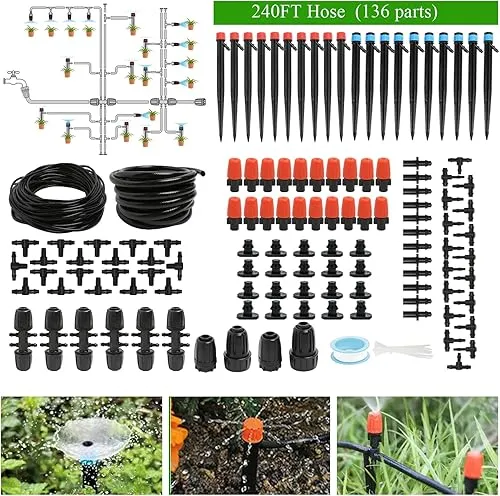
- Under 18–20 feet: 1/4-inch drip line works fine. Standard raised bed kits use this. Keep emitter spacing at 6–9 inches for lettuce and herbs, 12 inches for vegetables.
- 20 to 200+ feet: You need 1/2-inch pressure-compensating drip line. The pressure-compensating part is key — it maintains consistent flow rate across long runs where pressure would otherwise drop at the far end.
Running 1/4-inch line beyond 30 feet, especially with close emitter spacing, results in the plants at the end of the run getting noticeably less water. It’s a common mistake and an easy one to avoid.
Question 3: Do you have a timer?
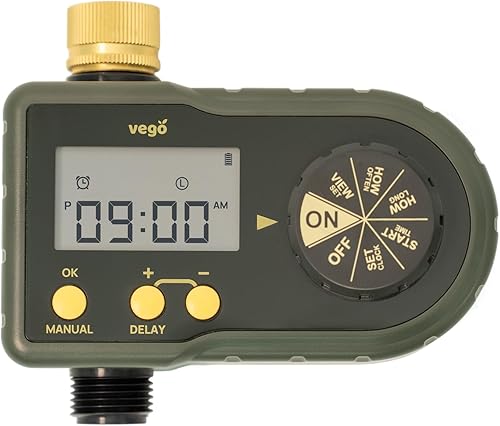
If the answer is no, buy one before you buy anything else. A basic battery-powered timer costs $20–50 and is the single highest-leverage purchase in any drip setup. Most garden plants need 5–15 minutes in the morning, sometimes a second short run midday during peak summer heat. Running drip continuously — or forgetting to run it at all — is how you get root rot or dead plants. The timer fixes both problems.
The Kits
For Outdoor Raised Beds: DripWorks Garden Bed Kits
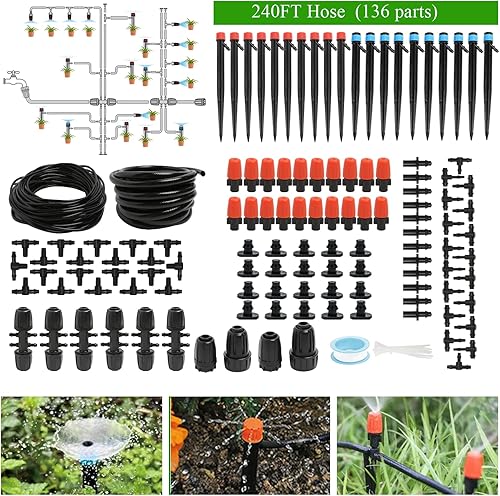
DripWorks offers purpose-built garden bed kits in multiple sizes — their 9-bed kit is what surfaced in the research, and it’s designed to expand zone by zone as your garden grows. One Reddit user on r/vegetablegardening switched to their system and reported fewer weeds and better harvests. The detail worth noting: they offer phone-based customer support where a rep will walk you through your specific setup.
That last part is genuinely useful for first-timers. Drip systems have a learning curve — emitter spacing, pressure setup, how to punch holes in the main line — and having someone to call beats watching a dozen YouTube videos.
Honest caveat: DripWorks appeared via a single Reddit mention in the research data. They’ve been around for decades and have a solid reputation in the gardening community, but if you’re comparing kits, it’s worth also looking at Rain Bird and Mister Landscaper — both have wide availability and good community support.
What to add regardless of which kit you buy:
- A pressure regulator at the spigot. Drip emitters are rated for ~25 PSI. Municipal supply runs higher. Without a regulator, you’ll see uneven flow and pooling.
- Fixed-flow emitters, not adjustable ones. Adjustable drippers clog at low flow rates and are hard to set consistently. Buy the fixed emitter rate you need (1 GPH, 2 GPH, etc.) and skip the variable heads.
- Black tubing, not clear. Clear tubing grows algae. Black doesn’t.
For Indoor Tent Growing: Mars Hydro Drip and Drain
This is a closed recirculating system. Water drips to plants, excess drains into collection trays, and a drainage pump sends it back to the 50-liter reservoir. Nothing goes to waste — which matters when you’re growing inside and can’t just let runoff soak into the ground.
The design details are thoughtful. The reservoir has a cover (blocks light, prevents algae). The tubing is black throughout for the same reason. The drainage trays have removable filtration inserts to catch debris before it reaches the pump. One unit handles 4 plants; chain multiple units together for 8 or more.
A YouTube reviewer who called it “a little daunting” going in said setup ended up being genuinely easy. The recirculating pump does add electricity dependency and a slight delay before the drainage pump activates — minor issues, but worth knowing.
Who this is for: Indoor growers using fabric or plastic pots (drainage holes required) who want automated drip with passive drainage recovery. If you’re running a soil grow in a tent and tired of hand-watering or dealing with runoff trays, this solves that problem directly.
Who this isn’t for: Outdoor gardeners. The closed-loop design assumes a controlled environment. In a raised bed in the sun, you don’t need drainage recovery — you need emitters in soil.
The Advice That Applies to Both
Whether you go with a kit or build from components, these principles came up consistently across the research:
Don’t water overhead if you’re growing vegetables. Drip irrigation’s biggest non-obvious benefit isn’t water savings — it’s disease reduction. Overhead sprinklers wet the leaves, which promotes mildew, fungal infections, and pest activity. Drip keeps water at the root zone where it belongs.
Flush your lines before first use. Debris from cutting and punching holes can clog emitters before you’ve run the system once. A two-minute flush saves a lot of troubleshooting later.
Plan for winter. Plastic drip fittings don’t survive a freeze. Drain and store them before temperatures drop below freezing, or buy freeze-resistant components if you’re in a climate where that’s routine.
Expandability matters at purchase time. If you have three raised beds now and want six later, buy a kit sized for six or one explicitly designed to expand. Retrofitting a kit that maxed out is annoying.
If You Read Nothing Else
- Growing in a tent? Mars Hydro Drip and Drain — closed-loop, algae-resistant, easier to set up than it looks.
- Growing in raised beds? DripWorks kits are worth a call to their support team for a sized recommendation. Add a pressure regulator, use fixed emitters, and put a timer on it.
- Building from components? Use 1/2-inch pressure-compensating line for runs over 20 feet. Keep 1/4-inch runs under 18 feet. Match emitter spacing to plant type. The brand on the bag matters less than getting those specs right.
The research on this category is clear on one thing: a well-designed cheap kit beats a premium kit set up wrong. Get the fundamentals right first.