Backpack Sprayers: Answer These 3 Questions Before You Buy
Heads up: some links below are affiliate links. If you buy through them, we earn a small commission — doesn’t change your price or our recommendations.
Most backpack sprayer roundups pick a winner. The problem is, there isn’t one. The right sprayer depends almost entirely on three things: how much ground you’re covering, how long you’ll be wearing it, and whether you’re willing to pump manually. Answer those three questions and the field narrows fast.
Here’s the framework — then the specific picks.
Question 1: How much are you spraying?
Small garden or spot-treating (under ¼ acre): A 1–2 gallon manual sprayer is probably fine. You don’t need anything on this list.
Medium to large yard (¼ to 1 acre): This is the sweet spot for 4-gallon backpack sprayers — the entire lineup below. Most homeowners live here.
Farm, acreage, or commercial (1+ acres): You’re in gas territory or running multiple batteries. The Cardinal gas unit or the Petra Tools HD4000’s 200+ gallon per charge runtime are built for this.
Question 2: Will you pump manually, or is that a dealbreaker?
Manual piston pumps require you to stroke the handle every 20–30 seconds to maintain pressure. Some people don’t mind. Others find it exhausting on sessions over 30 minutes. Be honest with yourself here — it determines whether you need battery power or not.
If manual is fine: Solo 425 or Chapin 63900. Both are excellent, and you’ll save $60–$150 over battery models.
If pumping is a dealbreaker: Cobalt 40V, Field King 190515, or Petra Tools HD4000. All run off battery and maintain pressure automatically.
Question 3: How long is each session?
Under 30 minutes — any type works, comfort is secondary.
30 minutes to 2 hours — padded lumbar support and hip straps start to matter. Check those specs before buying.
2+ hours — battery runtime, weight distribution, and a lockable shutoff valve become critical. You don’t want to be holding the trigger continuously for two hours.
The Picks
Best Manual: Solo 425 4-Gallon Piston Backpack Sprayer — $60–$90

For manual sprayers, piston beats diaphragm. Piston pumps build and hold pressure better — and the Solo 425 is the standard recommendation in this category for good reason.
The 20-inch “unbreakable” wand pairs with a 48-inch high-pressure hose, giving you reach without contorting yourself. Four interchangeable nozzles cover most tasks (herbicide, fertilizer, pesticide, disinfectant), and it’s T-Jet compatible if you need specialty tips. The double filtration system does a solid job keeping clogs away — a genuine annoyance on cheaper sprayers.
The honest trade-offs: the shoulder straps have a reputation for sliding during use, and the lid needs a firm tighten or it’ll weep. Neither is a dealbreaker, but worth knowing. The bigger limitation is inherent to manual piston operation — you’re pumping every 20–30 seconds to keep consistent pressure.
Best Manual (Runner-Up): Chapin 63900 Jet Clean — $70–$100
If clogging is your nemesis — spraying anything with particles, or using hard water — the Chapin 63900 solves it in a clever way: its patented Jet Clean pump back-flushes the filter with every stroke. You’re cleaning the sprayer while you spray. That’s a genuinely useful innovation, not marketing fluff.
The 6-inch tank opening (versus the typical 4-inch) makes filling and cleaning noticeably faster after herbicide or pesticide runs. Three nozzle types included, padded straps with lumbar support, and Viton seals for chemical resistance round out a well-thought-out package.
The downsides mirror the Solo — manual pumping fatigue and occasional harness-fit issues. It costs a bit more than the Solo for the self-cleaning convenience, which is worth it if you spray frequently or in clog-prone conditions.
| Solo 425 | Chapin 63900 | |
|---|---|---|
| Pump type | Piston | Piston w/ Jet Clean |
| Tank opening | Standard | 6-inch (wide) |
| Nozzles included | 4 | 3 |
| Viton seals | No | Yes |
| Price | $60–$90 | $70–$100 |
| Best for | Versatility | Clog resistance |
Best Battery (Value): Field King 190515 — $120–$170
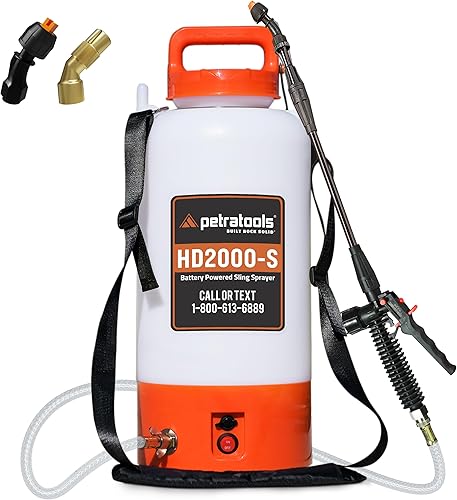
The Field King earns its spot because it’s built for repeated chemical exposure in a way most battery sprayers aren’t. The powder-coated steel frame resists harsh chemicals, the triple filtration system extends pump lifespan, and the 40 PSI preset pressure at 0.2 GPM gives you consistent results without fiddling.
The 18V lithium battery runs up to 4 hours or 50 gallons per charge — plenty for a full yard session. The lockable wand shutoff is a small feature that makes a big difference on long sessions: you’re not white-knuckling the trigger for an hour. The 24-foot vertical spray height is useful for reaching under eaves or tall shrubs.
It’s aimed at landscapers and pest control pros but works perfectly for serious homeowners. The occasional leak report and mixed long-session pressure consistency keep it from being perfect, but the build quality shows.
Best Battery (Max Range): Cobalt 40V — $150–$220

The Cobalt’s selling point is simple: 120 gallons per charge on a 40V battery, with a 5-year tool / 3-year battery warranty. For residential users with large properties who’ve been burned by short-lived battery tools, that warranty matters.
The 25-foot spray reach is impressive, and when it runs well — as most units do — it provides serious output with minimal effort. The ergonomic shoulder and hip strap setup handles the weight reasonably well.
The caveat worth knowing: some units report mechanical failures early — leaking connectors, faulty motors. The warranty exists partly because Cobalt knows this happens. If you buy, register immediately and save your receipt. This is a residential power-user tool, not a commercial workhorse.
All-Day Runtime: Petra Tools HD4000 — $130–$180
The HD4000’s spec sheet is genuinely impressive: a 12V 8Ah battery rated for 200+ gallons per charge and 6–8 hours of runtime — the longest in this category. Adjustable pressure from 40–90 PSI gives you real control across different tasks, and six nozzles cover nearly anything you’d want to spray.
The trade-off is brand recognition. Petra Tools doesn’t have the track record of Solo, Chapin, or Field King, and independent long-term reviews are thin. If the specs hold up in practice, it’s excellent value for large-property homeowners or anyone running all-day jobs. If you’re risk-averse, the Field King is the safer choice at similar money.
Commercial/Acreage: Cardinal Gas Backpack Sprayer — $200–$350
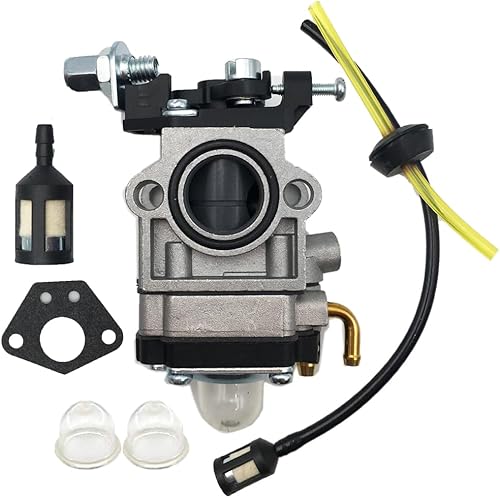
Gas-powered sprayers exist for one reason: speed at scale. The Cardinal’s 1/8 HP engine hits up to 435 PSI, the 5-gallon tank covers serious acreage, and it claims to cover an acre in 15 minutes — roughly 7x faster than manual pump sprayers.
The price you pay is everything else. At 26 lbs loaded, you feel it. The 50:1 fuel mix adds a prep step. The engine is loud. Maintenance overhead is real. And for anything under an acre, you’re carrying all that weight and complexity for a speed advantage you don’t need.
If you’re doing mosquito and tick control on rural property, managing a farm, or doing commercial pest control work — this is the right tool. Everyone else should look elsewhere.
Before You Buy: The Quick Checklist
A few things worth verifying on any sprayer before committing:
- Viton seals — if you’re spraying herbicides or pesticides (not just water or fertilizer), Viton seals matter. They resist chemical degradation. Cheap rubber seals fail faster.
- Translucent tank — opaque tanks mean constantly stopping to check levels. Not a dealbreaker, but annoying.
- Lockable shutoff — more important than it sounds for anything over 30 minutes.
- Tank opening width — 6-inch openings (Chapin) clean significantly faster after chemical applications.
- Leaks — the single most common failure mode across all brands. Check reviews specifically for seal quality and lid tightness before buying.
If You Read Nothing Else
Match the tool to the task. A manual piston sprayer (Solo or Chapin) is the most reliable long-term option and handles the vast majority of homeowner use cases for $60–$100. Step up to battery (Field King or Cobalt) only if you genuinely hate pumping or have a large yard and long sessions. The gas Cardinal is for professionals with real acreage — everyone else is buying weight and noise they don’t need.